Viral TikTok Finds
5 Viral TikTok Finds You'll Judge First and Add to Cart Later
There is a very specific TikTok pipeline that most people have experienced at least once and will not fully admit to. It starts with a video of a product that makes absolutely no sense. Your first reaction is to send it to someone — not because you want it, but because you cannot be the only person who has just seen this. They respond. You discuss it. You agree that it is ridiculous. You close the app. And then, approximately two hours later, you open a new tab and begin looking for where to buy it, because somewhere between sending the video and closing the app, something shifted, and now the ridiculous thing has become the necessary thing, and the only remaining question is shipping time.
These are those products. The ones that earn a laugh before they earn a sale, that get shared before they get purchased, that feel completely unnecessary right up until the moment they arrive and immediately make sense. Weird? Yes. Explainable? Not always. Somehow still worth having? Consistently, reliably, every single time.
Here are five viral TikTok finds you will absolutely judge first — and probably buy anyway.
#1 The Giant Safety Pin Hair Clip That Looks Like a Bad Idea but Works
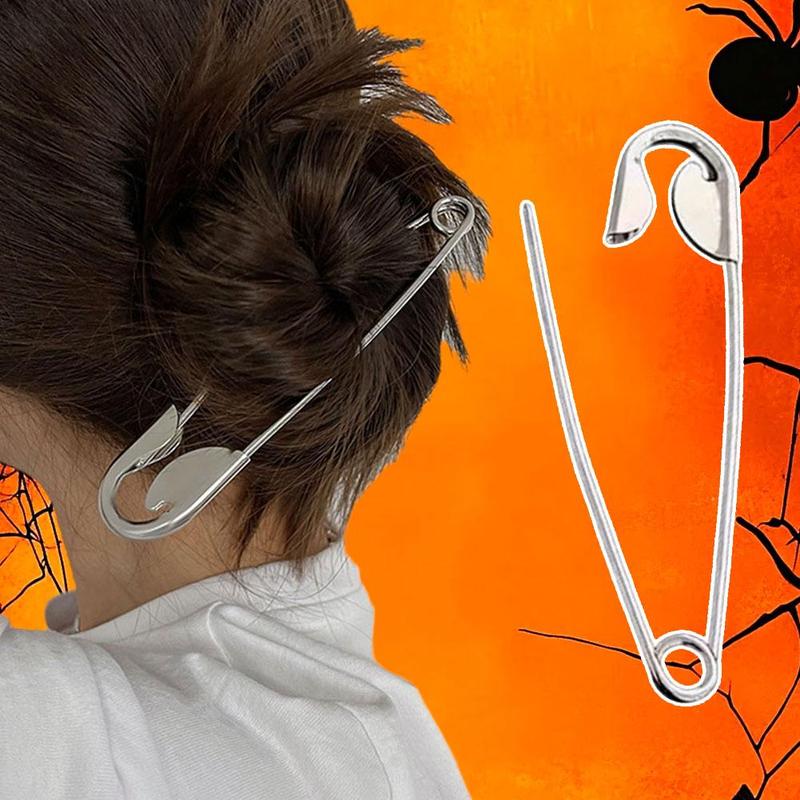
At first glance, this looks like someone found a safety pin that had been left in a commercial dryer for an entire decade — scaled up to a size that belongs in an industrial setting, nowhere near a human head — and then looked at it, looked at their hair, and made a decision that should not have worked but absolutely did. The giant safety pin hair clip is the kind of accessory that exists in the space between clearly not designed for this purpose and somehow perfect for exactly this purpose, and it lives there with a confidence that is genuinely difficult not to respect.
The way it functions on actual hair is the part that surprises people. You expect something this dramatic and this conceptually questionable to be purely decorative — to look interesting in photos and spend the rest of the time sliding out, pulling hair, or simply failing to hold anything in place. Instead it grips. It stays. It takes a hurried, unplanned bun — the kind assembled in forty-five seconds before leaving the house — and gives it a structure and intentionality that suggests the whole thing was planned from the beginning. The safety pin elevates the chaotic bun into something that reads as a choice rather than a compromise. This is the highest possible service any hair accessory can provide.
The social dimension of wearing it in public is also worth noting. People notice it immediately, because the human brain is calibrated to flag oversized versions of familiar small objects as something requiring attention and possibly explanation. You will be asked about it. Strangers, coworkers, people in line — everyone who sees it will do a double take and then, almost without exception, say some version of wait, is that an actual safety pin? And the answer — yes, scaled up, turned into a hair clip, working perfectly — will produce a reaction that is warm and slightly delighted, because the best accessories are the ones that make people feel something before they have finished processing what they are looking at.
#2 The Wrench Phone Case That Makes Your Phone Look Like It Pays Bills
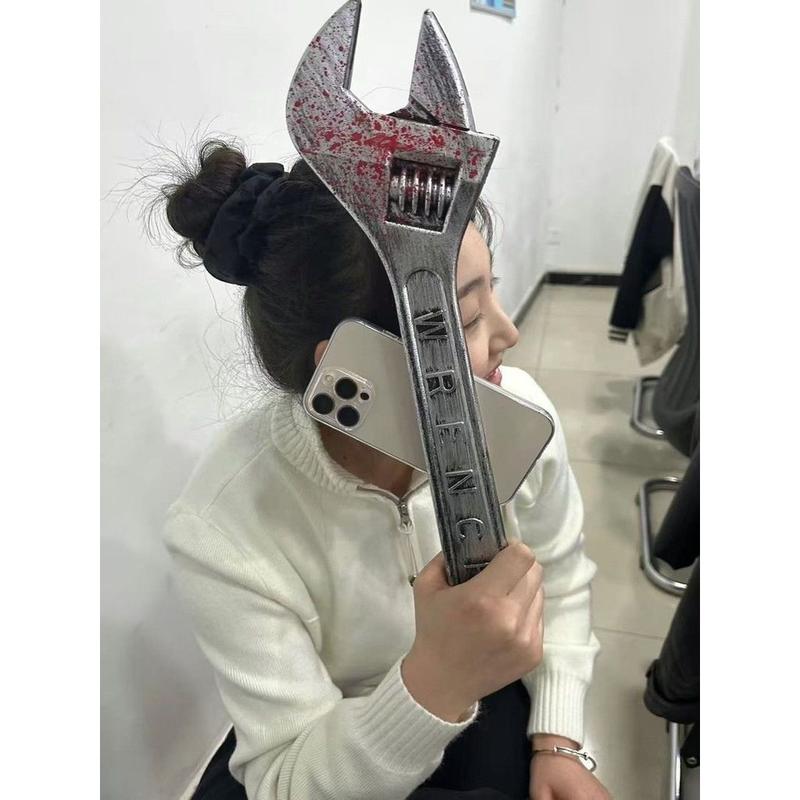
Most phone cases make a quiet statement. Minimalist cases say I have taste and am not interested in drawing attention to my phone. Clear cases say I spent money on this phone and want you to know that. Branded cases say I am loyal to this aesthetic. The wrench phone case says something entirely different. The wrench phone case says my phone has a job, and that job involves infrastructure, and you should probably not get in the way.
The wrench is three-dimensional and detailed in a way that commits fully to the premise. This is not a wrench pattern printed flat on a case. This is a wrench — or something that strongly resembles one — protruding from the back of a phone with the confident presence of a tool that belongs in a garage and has ended up attached to a smartphone through circumstances it has not been asked to explain. People who see it in person do the same thing every time: they look at it, look at the phone, look at the wrench again, and then either laugh or ask to hold it, because the brain needs tactile confirmation that what the eyes are reporting is accurate.
What the wrench phone case actually communicates, beyond the obvious comedy, is a kind of cheerful irreverence toward the entire concept of phone accessories as status signals. The phone case has become, in many social contexts, a subtle indicator of taste, income, and aesthetic alignment. The wrench case opts out of this entirely. It does not signal taste. It signals personality — specifically, the personality of someone who looked at the options available and decided that hardware store confidence was more interesting than any of them. It protects the phone adequately. It also makes the phone look like it could fix a leak, which is a combination of features that no other case currently on the market is offering.
#3 The Bald Monk Wig That Instantly Changes Your Entire Personality
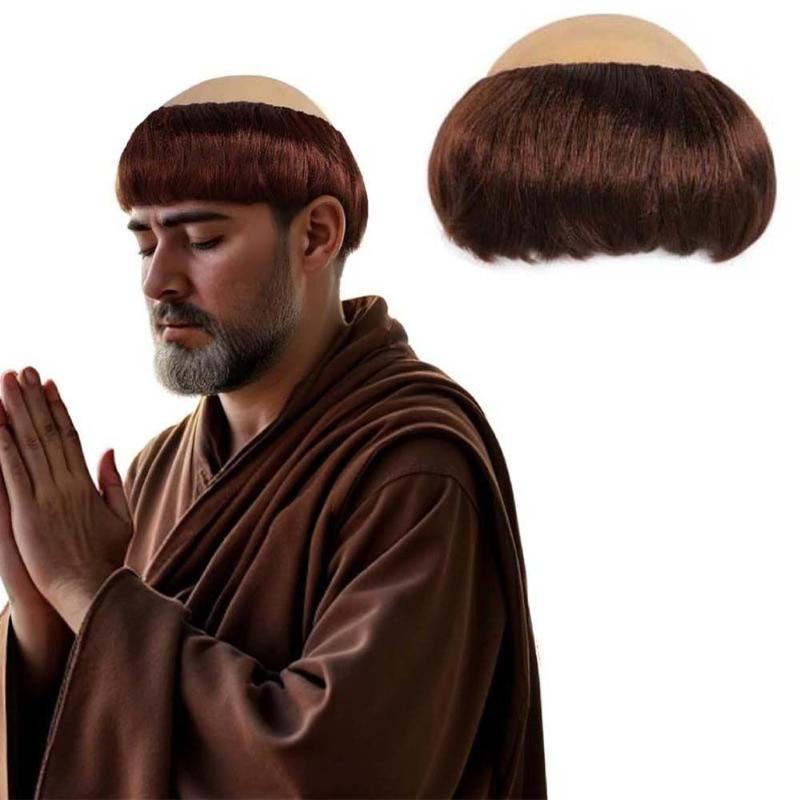
There are costumes that change how you look and costumes that change how you feel, and the second category is significantly rarer and more valuable. The bald monk wig belongs firmly in the second category. The moment it goes on — the smooth dome, the fringe of hair around the sides, the immediate visual suggestion of someone who has made peace with all the things you have not yet made peace with — something happens to the person wearing it. The posture adjusts. The expression settles. A quality of unearned wisdom enters the face and refuses to leave. You have not become calmer. You have not achieved enlightenment. But you look like you have, and in social situations, that distinction matters less than you would expect.
The behavioral shift it produces is the product's real magic. People who put on the bald monk wig begin speaking differently — more slowly, more deliberately, with the cadence of someone who has spent considerable time in contemplative silence and emerged from it with things worth saying. They offer advice nobody asked for. They respond to questions with questions. They gesture meaningfully at nothing in particular. None of this is planned. It simply happens, because the wig carries an energy that the wearer absorbs without realizing it, and the people around them respond to it instinctively, which reinforces the energy, which deepens the performance, until someone takes the wig off and everyone returns to normal and cannot fully explain what just happened.
As a product for parties, group events, office situations, or any gathering where the energy needs redirecting in a dramatic and immediately funny direction, this is one of the most efficient tools available. It requires no setup, no explanation, and no particular comedic skill from the wearer — the wig does all the work. One person puts it on, the room adjusts, and for the next however-long, whoever is wearing the monk wig becomes the unofficial spiritual advisor of the occasion, dispensing wisdom of variable quality with the serene confidence of someone who has genuinely left society behind and found something better on the other side.
#4 The Overstimulated Warning Sign Hair Clip That Saves Everyone Time
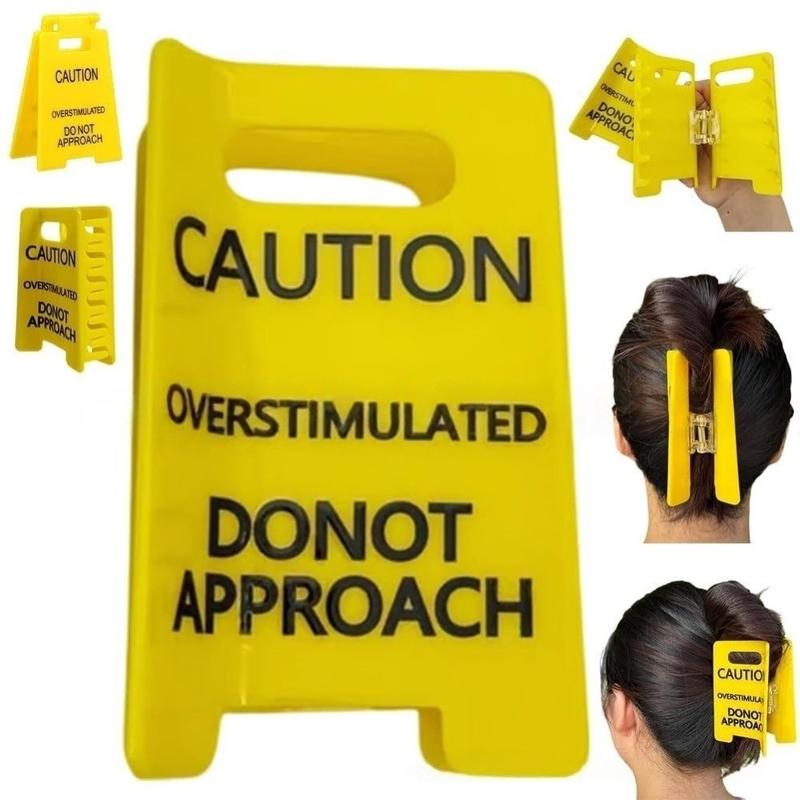
Fashion has always served a communicative function alongside its aesthetic one. What you wear tells people things — about your taste, your mood, your identity, your affiliations, your general orientation toward the world on a given day. Most of this communication is subtle, requiring interpretation, leaving room for misreading. The overstimulated warning sign hair clip eliminates all of that ambiguity. It is a yellow caution sign. It says OVERSTIMULATED. It says DO NOT APPROACH. It is clipped to your hair where it can be seen from a reasonable distance. The message has been delivered. The communication is complete.
The genius of it as a wearable object is how much it compresses into a very small format. You do not have to explain that today is a lot. You do not have to manage the social performance of being fine when you are not entirely fine. You do not have to navigate the complicated calculus of how much to share and with whom and whether the timing is right. The clip has already handled all of that. It is functioning as a boundary-setting device attached to a hair accessory, which sounds like it should not work and works completely. People who see it read it, process it, and adjust their approach accordingly — which is all anyone wearing it was really asking for.
It also does something interesting to the people who notice it and recognize the feeling it is describing. There is a specific kind of relief that comes from seeing something external acknowledge a state you have been carrying internally — the feeling that a thing you have been experiencing privately has been named and made visible and found relatable by someone else. The overstimulated hair clip produces that relief, not just for the wearer but for anyone who reads it and thinks yes, also me, currently. It is technically an accessory. Emotionally, it is a support group in clip form — worn on the head, communicating clearly, requiring nothing further from the person behind it except the decision to put it on and let it do its job.
#5 The TungTung Sahur Toothbrush Toy That Makes No Sense and That's Why It Works
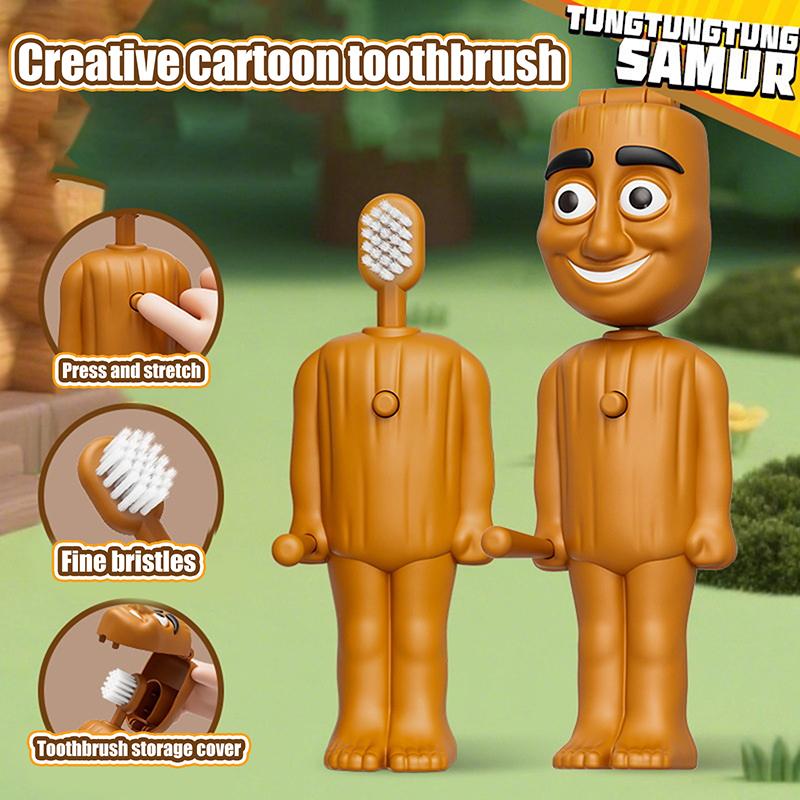
Some products can be explained. You describe what they are, what they do, what problem they solve, and the explanation lands cleanly and the person listening understands why the product exists. The TungTung Sahur Toothbrush Toy is not one of those products. It is a small wooden stick figure attached to a toothbrush, and it moves, and the movement is chaotic in the specific way that things are chaotic on TikTok — immediately arresting, difficult to look away from, impossible to fully justify but somehow completely compelling once you have been exposed to it for more than three seconds.
The TungTung character itself is a product of internet culture in its purest form — something that emerged from a specific corner of online video, accumulated enough shared energy to achieve a kind of viral critical mass, and crossed over into physical merchandise before most people had fully processed what it was or why they cared about it. This is how TikTok virality works at its best. The thing does not need to make sense. It needs to have the right energy, the right timing, and the right combination of absurdity and specificity that makes people feel like they are in on something, even when what they are in on is a small bouncing stick figure attached to a toothbrush having what appears to be a personal breakdown.
What makes it work as a physical product is that the toy carries the same chaotic energy in real life that the videos carry on screen. It moves in the right way. It bounces with the right commitment. It looks exactly like what it looks like in the videos, which sounds like a low bar and is actually a significant achievement, because many viral products fail precisely because the physical object cannot live up to the energy of the content that made it famous. This one manages it. It arrives, it bounces, and the person holding it immediately understands why this thing went viral — not because it solves a problem or fills a need or represents the pinnacle of product design, but because it is tiny and chaotic and committed to being exactly what it is, which is enough, which has always been enough, which is the core truth of everything that has ever done well on TikTok.
Want more?
These are just 5 of the weird and wonderful things we've found. There's a lot more where that came from.
Browse All Finds →