Filipino Culture
What Is Anik Anik? These 5 Finds Explain It Better Than We Can
There is a word in Filipino that does not translate cleanly into English. Not because it is complicated — but because English does not have a single word for the specific, warm, slightly chaotic feeling of a shelf full of small things that matter to you for reasons you cannot fully explain to anyone else.
The word is anik-anik.
It comes from kung ano-ano — loosely, "this and that" — and it describes the small trinkets, sentimental keepsakes, and miscellaneous objects that accumulate in a Filipino home not because they are practical or expensive or impressive, but because something about them is impossible to walk past. The tiny souvenir from a trip seven years ago that never left the shelf. The keychain someone gave you as a joke that you have carried every day since. The small figurine that cost almost nothing and somehow means everything. The thing that makes zero sense to anyone who visits your home and makes complete sense to you.
This is sentimental maximalism — not hoarding, not curating, but accumulating with feeling. The pasalubong that lives on your desk long after the trip ended. The sticker on your water bottle you cannot bring yourself to remove. The pen shaped like a fish that you use at work with a completely straight face because you have stopped explaining yourself to people who would not understand anyway.
All of it, together, telling a story about who you are in the most specific and personal way that objects can tell a story.
These five finds are that. They are small and specific and sentimental and unnecessary in the most necessary way possible. They are the things you add to cart at eleven at night with zero practical justification and feel completely right about when they arrive. They do not need to be explained to the right person. To the right person, they explain themselves.
This is anik-anik. And these five finds are the best definition of it we have ever found.
#1 The Cat Keychain That Plays With Its Own Balls — And Nobody Can Look Away
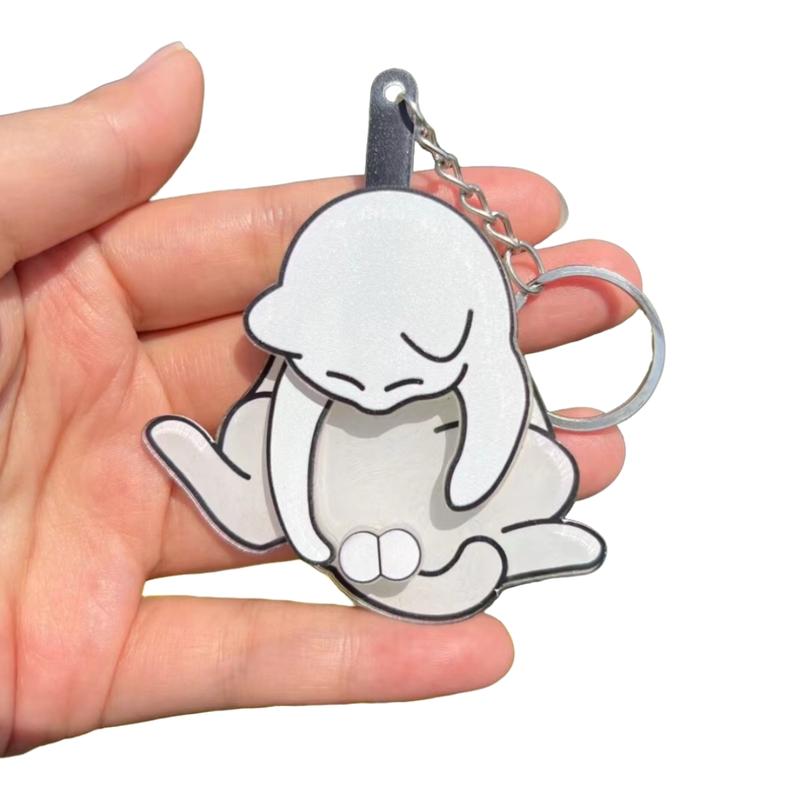
There are products that are funny in a quiet way — a gentle humor that reveals itself slowly, that you have to explain to people, that lands softly and leaves a small smile. This is not one of those products. This is a cartoon acrylic cat keychain with a button on the back, and when you press it, the cat reaches down and spins its own balls. Continuously. With commitment. While you hold it. In public.
The mechanism is the genius of it. The cat is not doing anything random or abstract — it is doing something specific, with the focused, unbothered energy of a creature that has zero awareness of social context and zero interest in developing any. You press the button and the cat goes to work. The balls rotate. The cat's expression does not change. It simply does what it does, with the calm dedication of something that was built for exactly this purpose and has found its calling. There is no ambiguity about what is happening. There is only the rotating action and the dawning realization on the face of whoever is watching.
As a bag charm it is technically just an acrylic keychain — light, compact, clips to anything, goes everywhere you go. In practice it is a social event waiting to happen. You pull out your keys and someone notices the cat. They look closer. You press the button. What follows is the specific sequence that this keychain produces every single time without exception: the look of confusion, then recognition, then the sound that comes out of a person's mouth when something is so absurd and so committed to its own absurdity that the only possible response is loud and involuntary. You cannot prepare for it even when you know it is coming. The cat does not care. The cat is already working.
As a gift it belongs in its own category — above gag gift, above novelty item, in the rare tier of things that people receive and immediately demonstrate to everyone else in the room, because sharing it is instinctive and unavoidable. It will be shown to coworkers. It will be brought out at family gatherings. It will be pressed repeatedly by people who already know what happens because they need to see it happen again. This is the highest possible outcome for a small acrylic keychain. This cat has achieved it. Completely. Unironically. While playing with its balls.
This is anik-anik not just because it is small and carried and collected — but because it is the kind of object that finds exactly the right person and makes absolutely no sense to anyone else, and that person carries it proudly and presses the button whenever they feel like it and does not explain themselves because the cat already said everything that needed to be said.
👉 Press it. Watch everyone's face.
Get it here →#2 The Isaw Ihaw Clay Keychain — Street Food as a Keepsake
There is a specific kind of Filipino memory that happens on the street, not at a table. It happens after school, outside the school gate, with twenty pesos in your uniform pocket and a choice to make between isaw, fishball, and kwek kwek. It happens on the way home from somewhere, when hunger is not the main reason you stop but hunger is the excuse. It happens with friends, standing, eating off sticks, the smoke from the grill carrying something in the air that is not quite food and not quite memory but is somehow both.
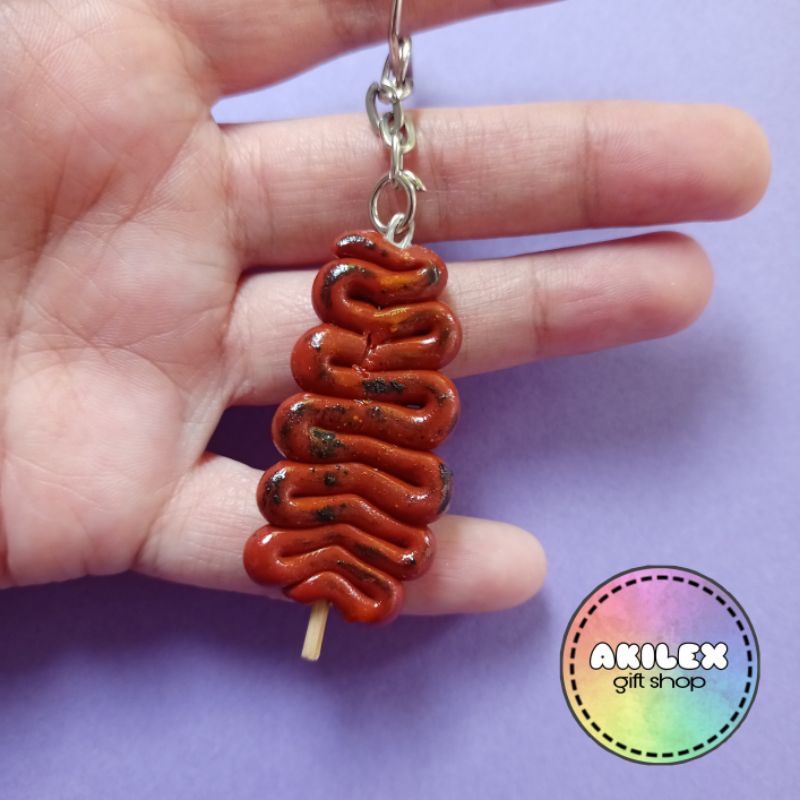
The isaw ihaw clay keychain is a handmade charm that looks exactly like a skewer of isaw, shaped and painted in clay with the specific brown-charred color of isaw done correctly — not undercooked, not burned, the color of something that has been on the right heat for the right amount of time by someone who knows what they are doing. It is small. It is detailed. It is made by hand, which means it has the slight imperfections that mass-produced things do not have — the small variations that tell you a person made this, not a machine, and that the person who made it knew exactly what they were making and why it mattered.
As an anik-anik item it is nearly perfect. It is a keepsake of an experience rather than a place — a souvenir not of a destination but of a feeling, the specific feeling of eating isaw on the street as a child or a teenager or an adult who still stops at the same cart on the way home because some habits are not habits, they are rituals. The smoke. The twenty pesos. The choice. The standing. The eating off sticks in a school uniform with friends who are still friends decades later.
Clip it to your bag and carry the smoke and the twenty pesos and the choice and the street and the whole memory of it, miniaturized and handmade and hanging quietly from your zipper wherever you go. That is what the best anik-anik does — it does not just sit on a shelf. It travels with you. It carries something. It holds a piece of a time and place that no photograph was taken of but that you remember anyway, completely, because some things leave a mark that has nothing to do with documentation.
👉 Street food. Bag charm. Priceless memory.
Get it here →#3 The Mofusand Cat Keychain — The Keychain That Finds the Right Person Every Time
There is a specific taxonomy of things that qualify as anik-anik in the modern sense — the contemporary layer of the tradition that sits alongside the pasalubong and the sentimental keepsake and extends it into the language of internet culture and kawaii aesthetics and the particular joy of carrying a small character object that means something specific to a specific kind of person. The small vinyl figure that sits on your desk and says nothing but communicates everything about who you are to anyone who recognizes it. The bag charm that is not just an accessory but an introduction — a way of saying, before you have spoken a word, I am this kind of person.
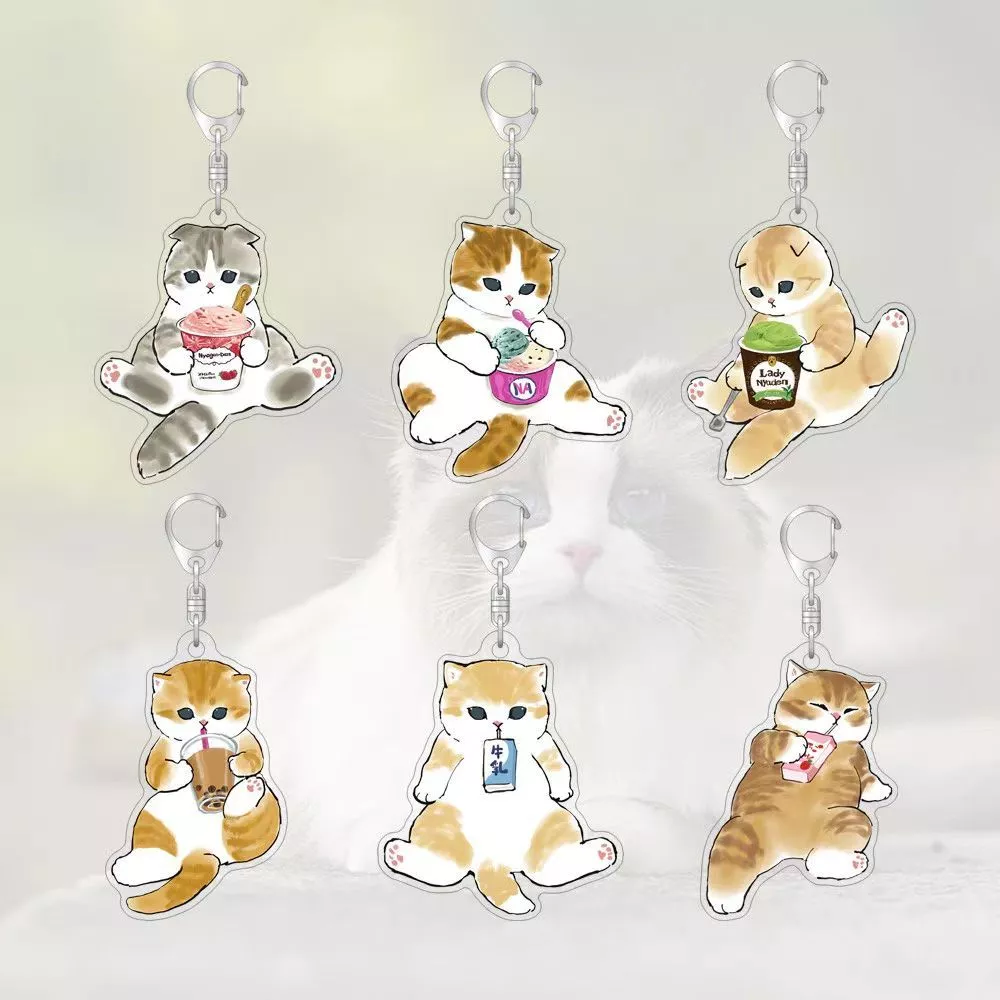
The Mofusand cat keychain lives in this category. Mofusand is the internet's favorite sleepy cat-fish hybrid — a round, drowsy cat rendered in the specific soft style of Japanese character design that has accumulated an enormous and devoted following online, not because of a TV show or a game or a marketing campaign, but simply because it is exactly the right character at exactly the right moment for people who find cats deeply relatable and take genuine comfort in small, soft, round things that look permanently unbothered. The acrylic keychain captures the character with crisp, full-color printing on clear acrylic — the format that makes character charms look clean and considered rather than cheap.
What makes it anik-anik is not just the charm itself but what it communicates. Someone who clips a Mofusand keychain to their bag is telling you something specific — that they are online in a particular way, that they collect with feeling rather than with a plan, that they respond to characters that are gentle and funny and slightly absurd in the way that the best internet things are gentle and funny and slightly absurd. It is an identity signal disguised as a bag accessory, which is exactly what the best anik-anik items have always been. Small. Specific. Meaningful to the right person in a way that requires no explanation between people who get it and no amount of explanation to people who do not.
The right person will see it on your bag and say something. That moment — that small, instant recognition between two people who collect with feeling — is worth more than the keychain costs and lasts longer than the clip that holds it.
👉 For the Mofusand person. You know who you are.
Get it here →
#4 The Japanese Mushroom Monitor Clips — Tiny, Kawaii, Colonizes Your Desk
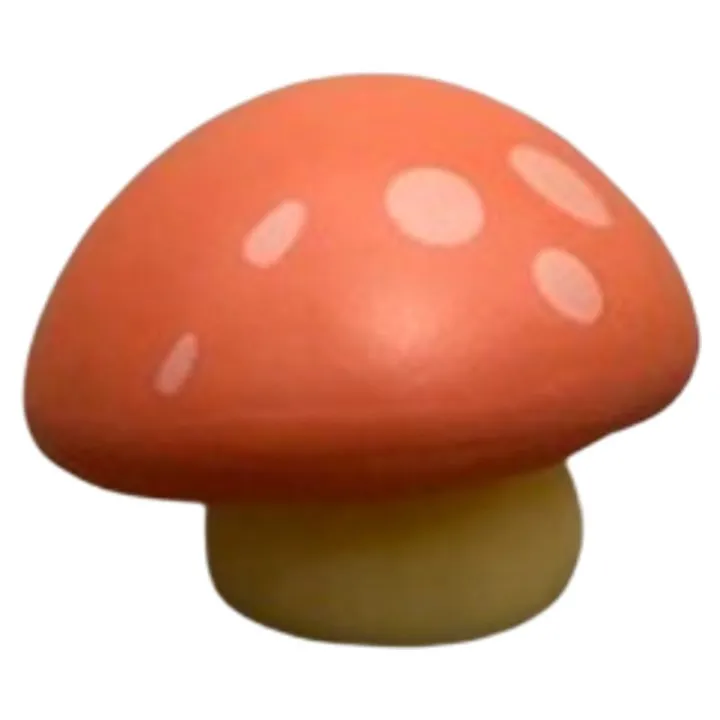
There is a type of anik-anik acquisition that does not begin with intention. You are not looking for desk accessories. You are not shopping for anything in particular. You see them — small pastel resin mushrooms, Japanese in aesthetic, the specific colors of something from a Studio Ghibli background or a fairy tale illustration — and something happens in your brain before your reasoning catches up. They are tiny. They clip onto the edge of a monitor. They look like they sprouted there overnight. And suddenly you need them in a way that is difficult to articulate but completely impossible to argue with.
The Japanese mushroom monitor clips are exactly this kind of find. They are small resin mushrooms in soft pastel tones — cream, sage, blush, the colors of things that exist in enchanted forests and cozy anime scenes — with clips on the bottom that grip the edge of a monitor, a shelf, a laptop screen, a headboard, any surface with an edge that will hold them. You clip one on. Then another. Then you arrange them. Then you step back and look at your monitor and it has a personality now that it did not have before, a tiny ecosystem living on its edge that arrived because you clicked something at eleven at night and did not regret it.
This is sentimental maximalism in its purest modern form. The mushrooms do not do anything. They hold nothing, organize nothing, improve no process or system or workflow. They simply exist, in pastel, on your monitor, making the space feel like yours in a way that a plain black screen edge never could. Every person who sees your setup will notice them. Some will ask. Some will simply understand without asking, which is the better outcome — the quiet recognition between people who accumulate small things with feeling and have stopped apologizing for it.
This is the anik-anik of it. Not useful. Not practical. Not impressive in any way that would make sense in a productivity conversation. But specific and deliberate and yours — three tiny mushrooms on the edge of your monitor that tell anyone who looks closely enough exactly what kind of person set up this workspace, and that are still there six months later because removing them would feel like losing something that was never supposed to be moved.
👉 Let the mushrooms colonize your setup.
Get it here →#5 The Fish Pen That Actually Writes — The Most Anik Anik Stationery Item in Existence
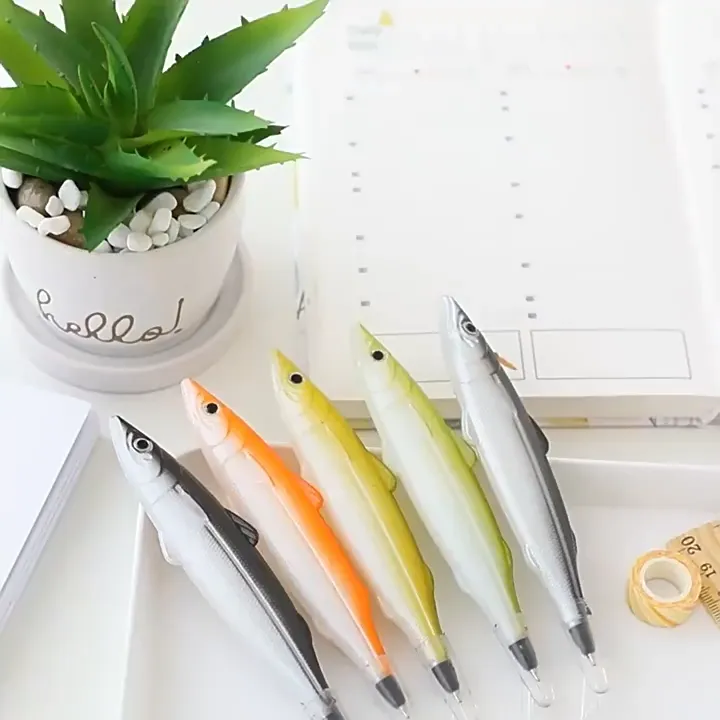
Most pens have one job. They write. They do it in a cylinder, usually blue or black, occasionally silver if someone spent more than fifty pesos on it, and they sit in a pencil case or a cup or a drawer being completely unremarkable until the moment they are needed and then being unremarkable again after. The fish pen has the same one job. It writes. It writes at 0.5mm with the clean, consistent line that a ballpoint pen is supposed to produce. It does everything a normal pen does. It just does all of it while being a fish.
The design is committed in the way that the best anik-anik items are always committed — not halfway, not metaphorically, not in the sense of a fish-colored pen or a pen with a fish sticker on the cap. It is a fish. The body is the fish body. The tail is at one end. The head is at the other end, and the tip of the pen emerges from the mouth, which means that every time you write something, you are writing with a fish that is cooperating with you, which is a relationship dynamic that no standard pen has ever offered. You pull it out of your pencil case and it is a fish. You write with it and it is a fish. You put it back and it is still a fish. The fish does not stop being a fish at any point in the process.
What makes it anik-anik is the specific reaction it produces in people who see it for the first time in a context where they are not expecting it. In a classroom, when a teacher asks to borrow a pen and receives a fish. In a meeting, when someone reaches across the table for something to write with and picks up a fish without looking and then looks. At a signing, at a counter, anywhere that a pen appears in public and is expected to be unremarkable — and is instead a fish. That moment of processing, that half-second where the brain registers pen and then registers fish and has to reconcile the two, is the product. The 0.5mm line is just a bonus.
It is also, quietly, the most Filipino kind of anik-anik in the stationery category — not because fish are specifically Filipino, but because the sensibility is. The willingness to use a fish pen in a serious setting without explanation. The confidence of pulling something completely absurd out of a bag and handing it over with a straight face. The specific Filipino humor of an object that is both fully functional and fully ridiculous, making no compromise between the two, asking nothing of the person using it except that they accept that this is what a pen looks like now. That is anik-anik. That is a fish. Those two things are the same thing.
👉 A pen. A fish. Both.
Get it here →Anik-anik is not a thing you buy. It is a thing that finds you — at eleven at night, in a Shopee cart, in a pasalubong bag, on a shelf in someone's house that you cannot stop looking at. It is the small stuff. The sentimental stuff. The cat that plays with its own balls on your keychain. The isaw on your zipper. The mushrooms on your monitor. The fish in your pencil case.
The stuff that makes zero sense to everyone else and complete sense to you.
That person is you. These five finds already know it.